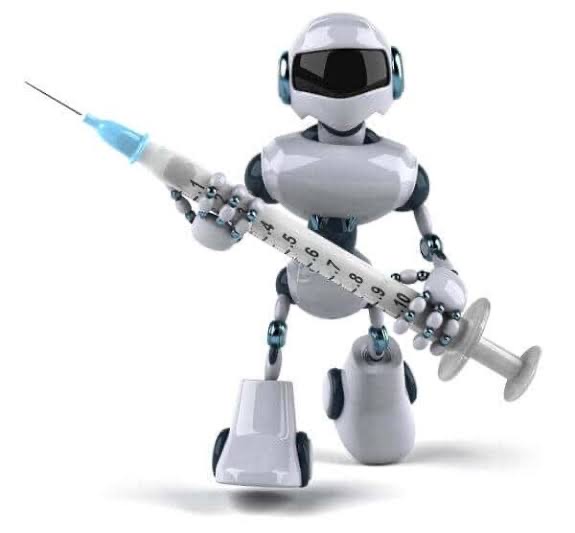
With the innovation in science and technology, healthcare has experienced surprising advancements. The Artificial Intelligence-based machines can work as efficiently as the human brain or even faster to heal people from ill health. This technology has proved to be contributing a lot to the medical industry.
The shortage of doctors, nurses, physicians, or other health workers worldwide can be overcome by the AI machines which save hours of waiting in line by the patients and also provide a quick diagnosis. AI technology has turned the world of health upside down.
Taking good care of health means maintaining your health by preventing, diagnosing, and treating any mental or physical illness on a timely basis. The purpose of doing this is an enhancement in the quality of life, which will help you live longer and healthier.
In today’s era, where new diseases take birth daily, there is a strong need for a machine that works faster than humans and provides best to best treatments for patient’s recovery. This is possible only with AI technology. Now, what is AI?
AI is the science of simulating the most powerful functions of the human brain to solve problems for humans and which can self-improve. They act as the robotic version of humans, but their working and calculations are way faster plus accurate than that of humans.
Machine Learning: ML is an application of AI that produces programs which enable machines to learn on their own from the data provided and
no detailed programming needs to be done for their functioning.
Modern deep learning: It is a subset of ML that works according to artificial neural networks. The main task is to recognize various patterns and generate the shape as an outcome.
Artificial Intelligence plays a very vital role in healthcare. The super-intelligent devices created by AI with the help of machine learning and deep learning has contributed a lot to the industry. Sometimes, even the most skilled and expert doctors can misdiagnose.
This is where intelligent machines are used for the patient’s safety and fast recovery.
Management of Medical History
The patient’s data needs to be managed appropriately so that it can be adequately accessed when required. A large number of records are stored by robots that make a tracing of data fast and easy.
Faster Tests and Scans
The daily and most common tasks in the hospital like X-Rays, CT Scans, Blood tests, and other check-ups are done faster and more accurately by robotic technology.
Online Consultation
This is an era of smartphones. Everything is available online, including the doctor’s suggestions. There are apps like WebMD, K Health, etc. that analyze the previous records and provide the medications online.

Digital Nurses
Digital nurses observe the patient’s conditions keenly and follow with the treatment in between the doctor visits. These robots can also explain the lab results to the doctors.
Recreating Drugs
Developing medicines through manual efforts in clinics can take many years to complete. So, an AI-powered program was created that can scan the existing medicine and redesign it to kill the disease.
Precision Medicine
The body is scanned with AI machines. They can detect diseases like cancer and other genetic diseases that can take place in the future. They can spot the rare illnesses that can’t be detected by humans.
Wearables for Self-Monitoring
For self-health monitoring, wearables from Fitbit, apple, etc. Came in the market that works according to heart rate and several steps walked by a person. It lets you know the calories burnt in a day.
Online Chatbots
The conversation is carried out online with a robot via auditory or textual ways. They chat in the same way as the human does and provide you with any information you ask for.